Glenhouse
Glenhouse is a holding company whose divisions span air travel, cannabis, entertainment, promotions, sports and strategy, alongside Glenhouse Live, Shop Glenhouse and the Glenhouse Foundation. Since March 2023 Corey has been its Fractional CTO/CDO, as an independent contractor: the one technology lead for about twenty web properties. That covers the division sites on a shared template, the platforms behind creator sponsorships, creator stores, events and pitch decks, the hosting they run on, the security work around them and the AI tools the team uses.
At a glance
- Type
- CTO
- Industry
- Holding company
- Live site
- weareglenhouse.com
- Built with
- Next.js, React, TypeScript and Tailwind CSS on Vercel
- Role
- Fractional CTO/CDO (independent contractor)
- Since
- March 2023
- Web properties
- About 20
- Hosting move
- Four sites from DreamHost to Vercel, October 2026
One lead, about twenty properties
The group runs about twenty web properties: the parent site, a site for each division, the Foundation, and the platforms behind its creator and sales work.
Corey owns the technology across all of them: what gets built, how it is hosted and secured, and much of the build itself. Most of it is Next.js and TypeScript on Vercel, so a pattern proven on one site carries straight to the next.
A shared template and design system
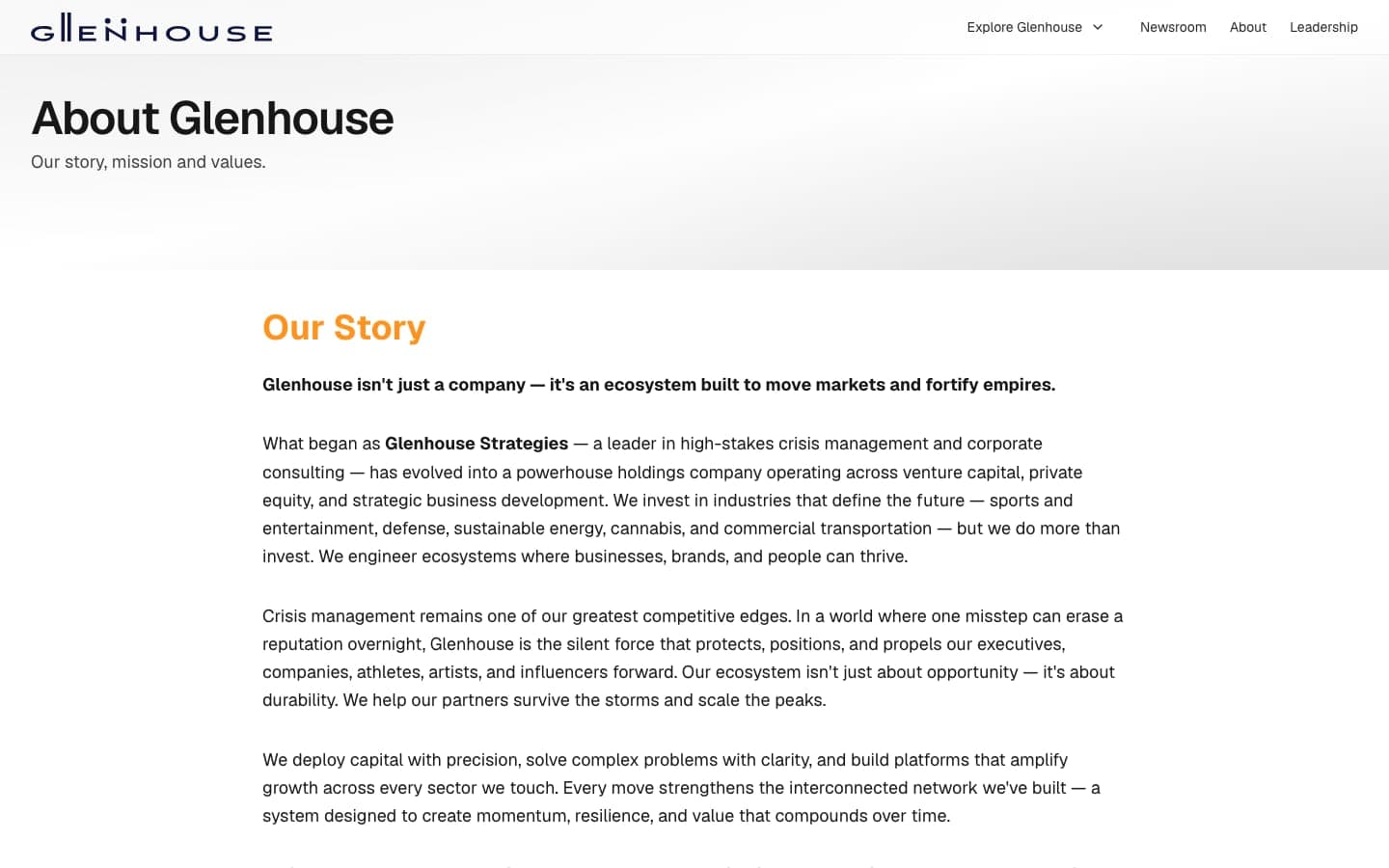
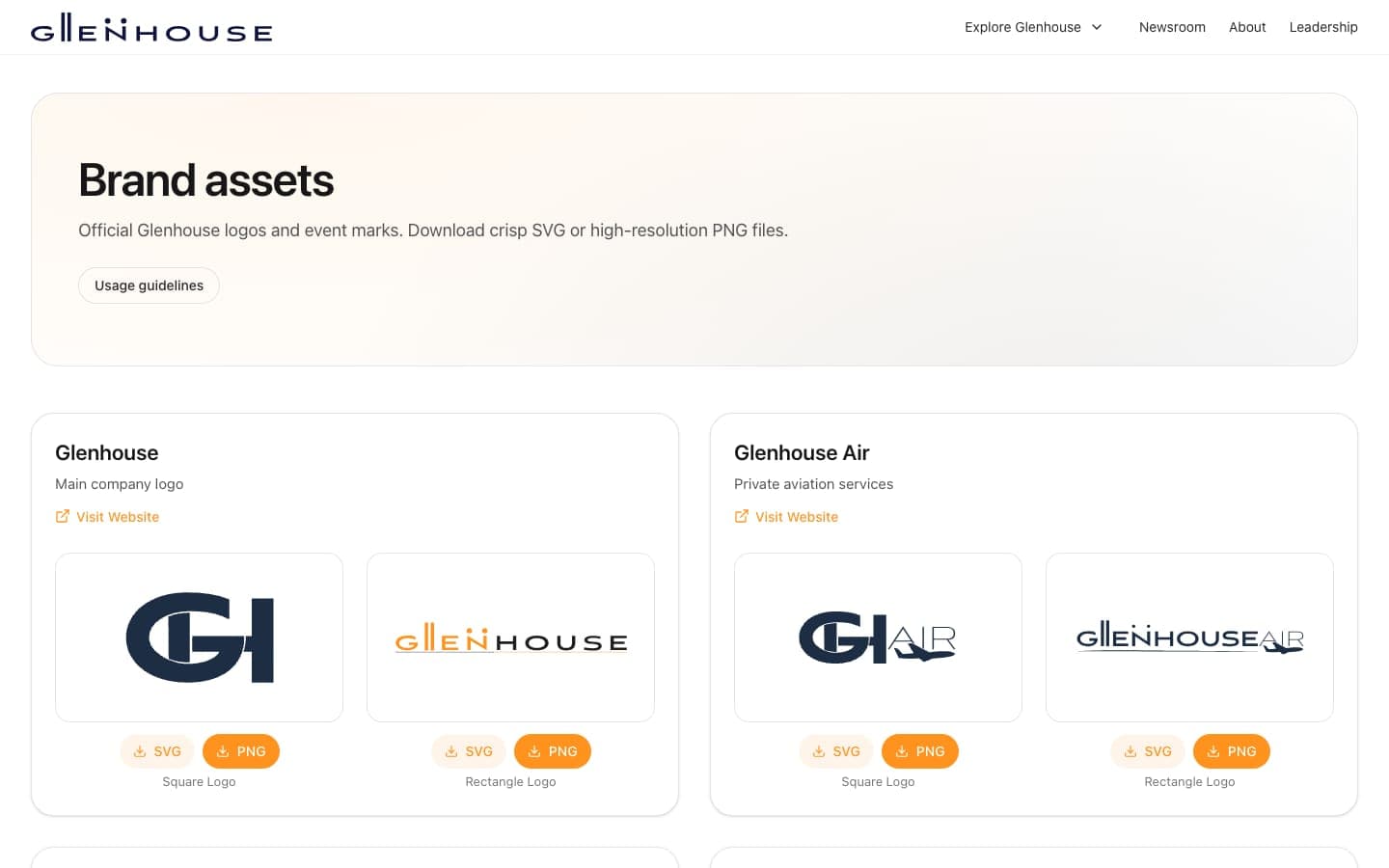
Division sites start from one Glenhouse template and design system and share its infrastructure. Each brand brings its own palette: Glenhouse Air keeps the system and swaps in a navy and champagne identity.
Forms on the newer and migrated division sites follow one pattern: validated input, email through Resend, a hidden honeypot field for bots, and a clear message instead of a silent failure when email isn't configured.
The parent site also publishes a small read-only JSON API of the group's divisions and leadership, with every parameter validated and every route rate-limited.
Platforms for the creator economy
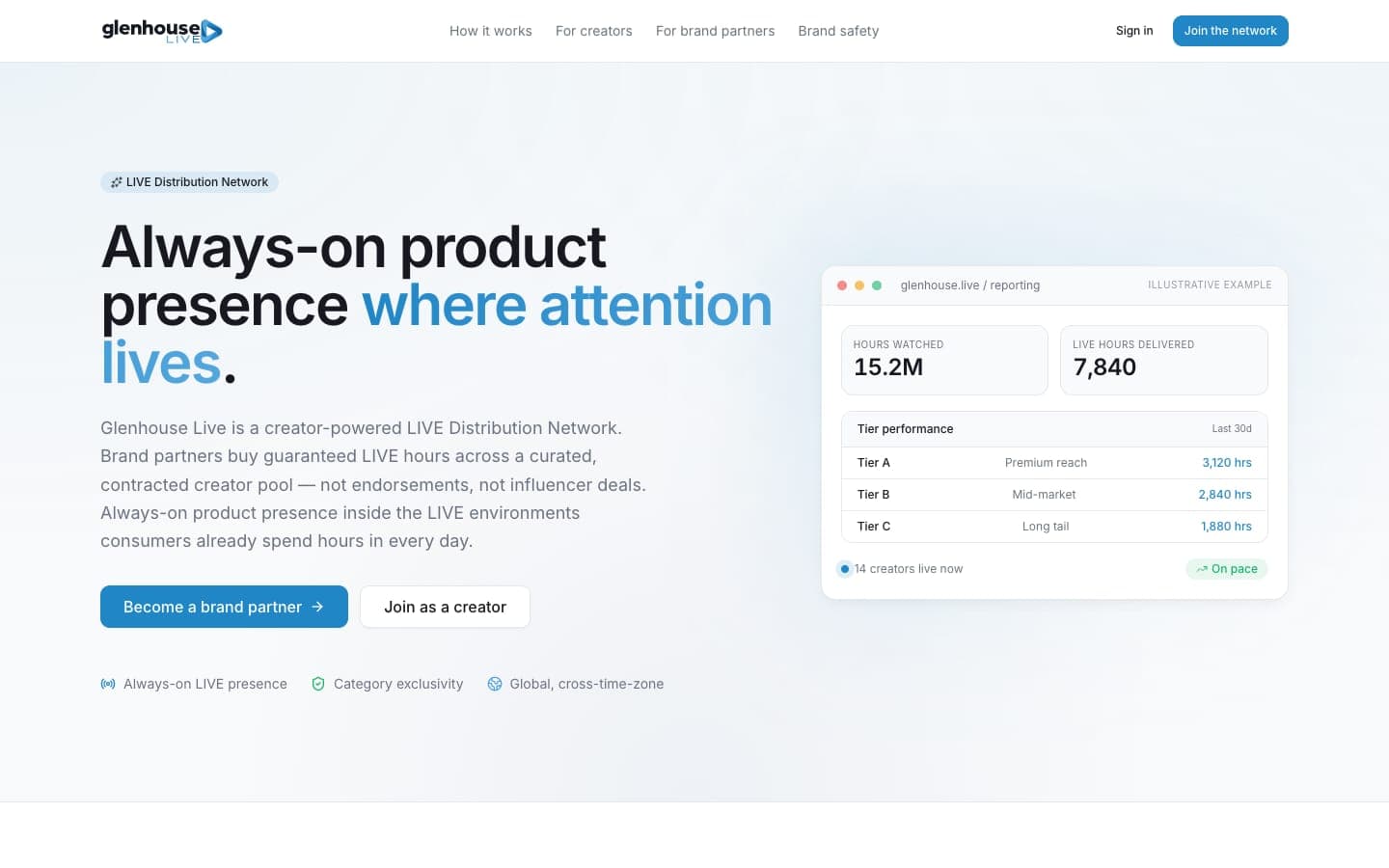
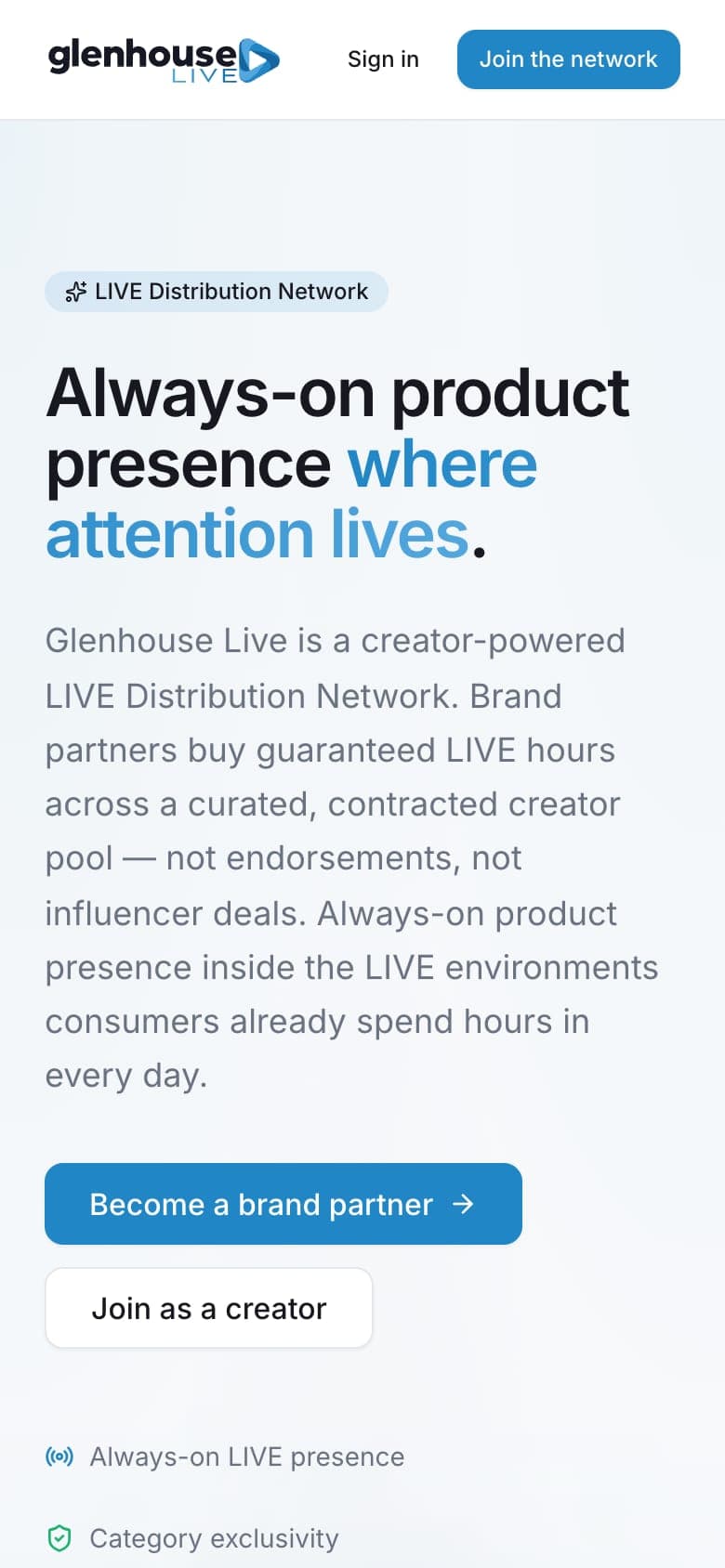
The strategy is to give creators and brands working infrastructure, not just pages. Glenhouse Live matches creators with sponsors, with four roles, Stripe Connect payouts and a worker that monitors livestreams. Glenhouse Shop gives each creator a headless Shopify mini-store with a commission ledger and payouts.
Sales runs on a pitch deck platform with password-protected decks, NDA e-signing, PDF export and a client portal, later productized as a white-label version. The Foundation's events, RSVPs and guest email run on a system of their own. Each platform has its own case study.
Off DreamHost, onto Vercel
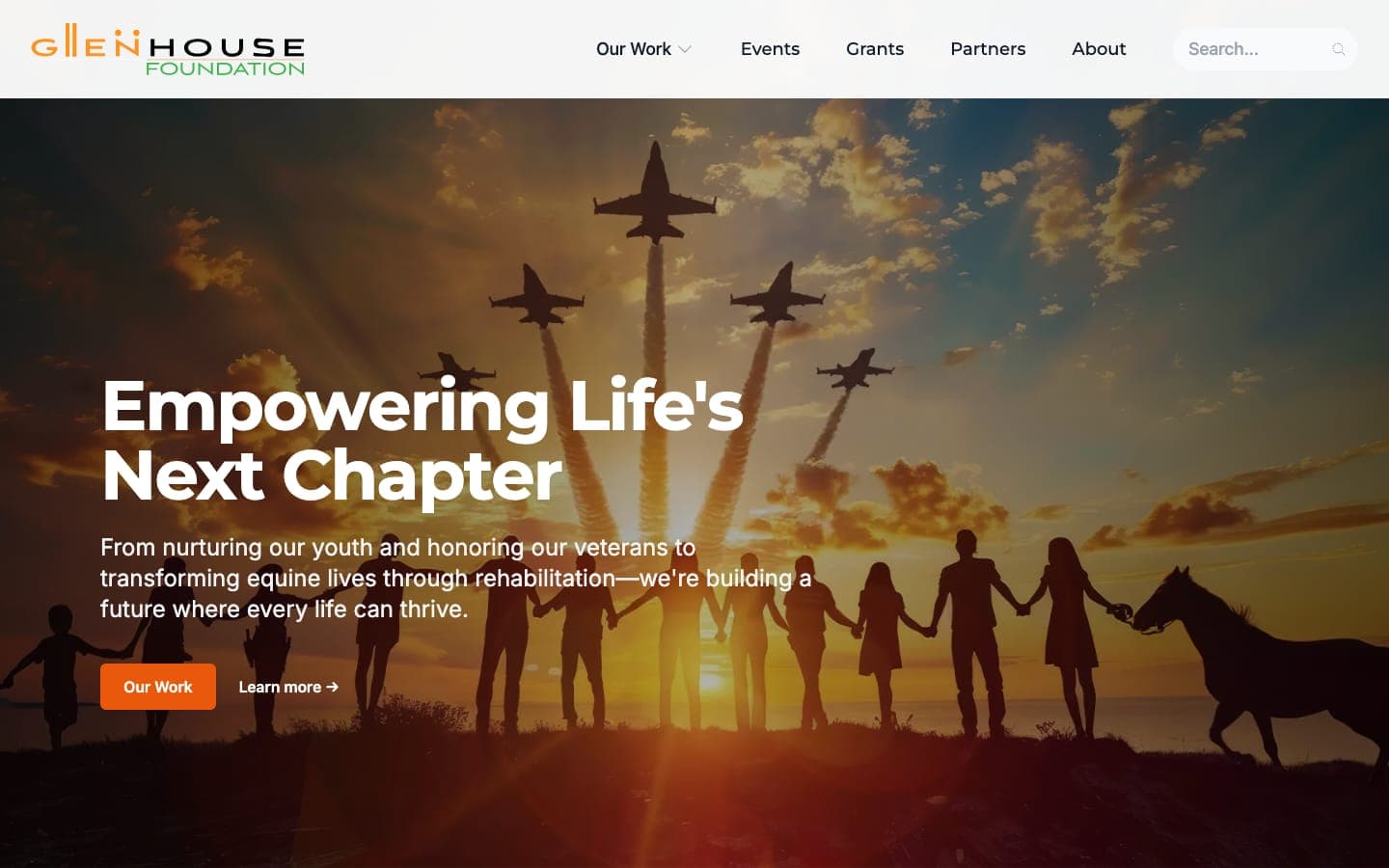
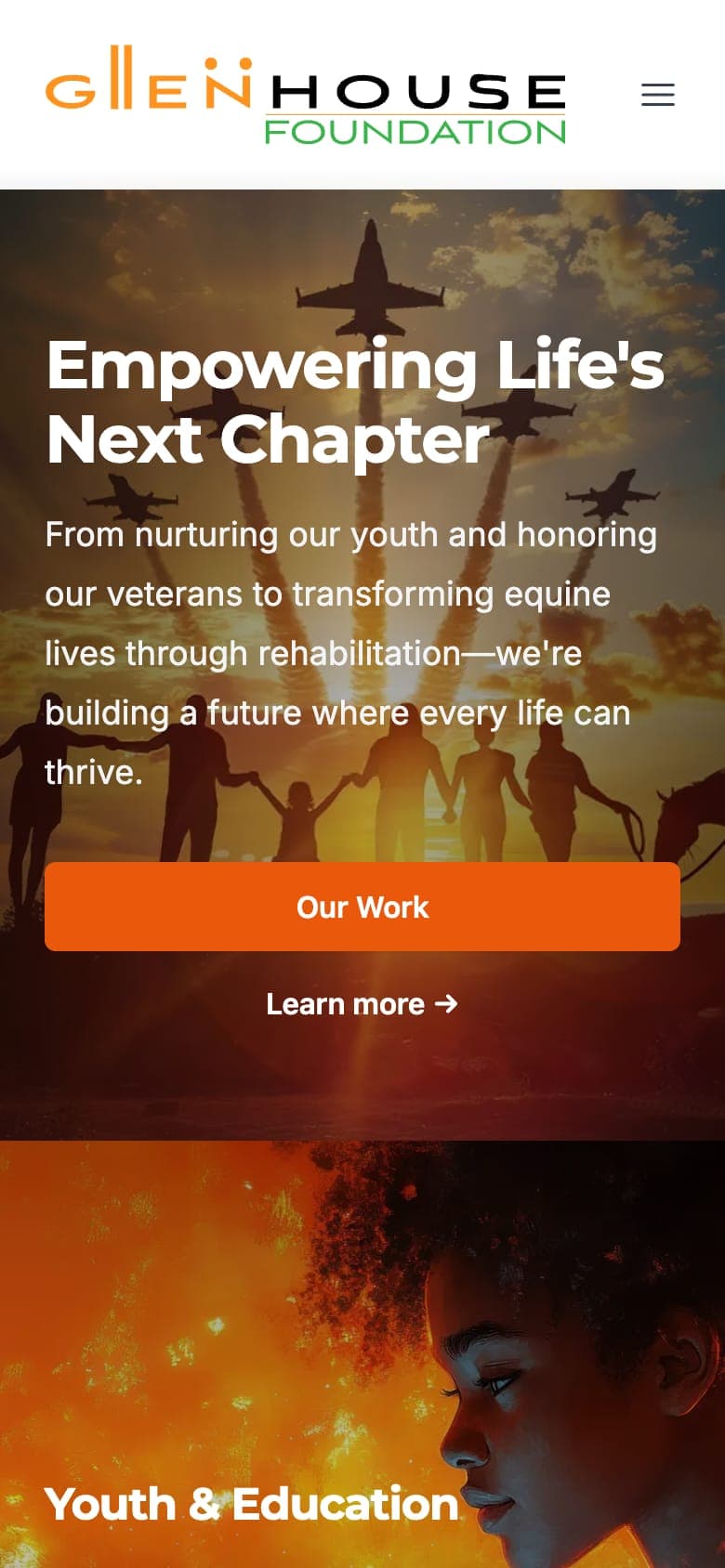
On October 7, 2026, four sites moved from DreamHost to Vercel in a single day: the Foundation, Media, Sports and Strategies. Each move took only the production source; the server configs, build output, logs and secrets found across the four stayed behind.
The forms moved with them: SMTP mail gave way to Resend, and replies go straight to the visitor. Forms that had never delivered a message were fixed along the way.
Vercel's file system is read-only, so the Foundation's events, RSVPs and email log moved into Postgres behind one small data module. Every save carries a version check, so two RSVPs arriving at once can't overwrite each other, and local development still runs from JSON files.
Security
Security is ongoing work across the group, not a one-off audit: framework upgrades, security headers and a Content Security Policy, validated input on every API, rate limits on public endpoints, and admin data kept behind an admin login.
In March 2026 the Cannabis site was audited and the Air site shipped security fixes; in June 2026 Glenhouse Live was hardened across authentication, payments and the livestream worker. Corey also leads incident response for the group.
Internal AI tools
The team has its own AI tools: a self-hosted assistant running open models, and a brand-protection monitor that flags accounts impersonating the group.
Highlights
- Four sites moved from DreamHost to Vercel in one day, with every form rebuilt on Resend.
- Concurrency-safe Postgres storage for the Foundation's RSVPs, with a version check on every save.
- One template and design system behind the division sites.
- Security headers, a Content Security Policy, input validation and rate limits on the parent site's public API.
- Each migration took only the production source; the configs, build output, logs and secrets found across the four sites stayed behind.
Let's talk.
Tell me what you're building. I read every message myself and usually reply within one business day.